
Ach lieben! I am several days behind for some very good reasons–no Internet connectivity–and some not as good reasons–beer and wine and cognac! Thank you for your patience, MDR.
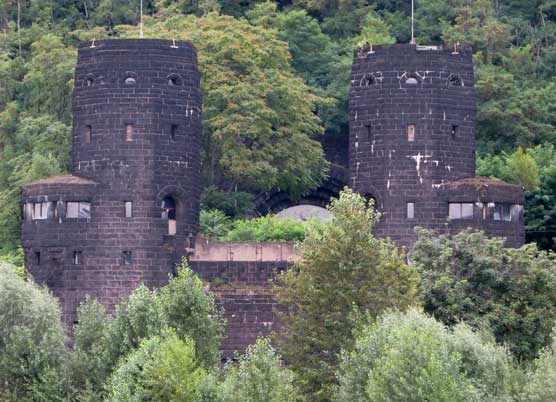
Today was a sailing and seeing day…and the first landmark we sailed and saw was a pivotal bit of WWII history: the remains of the bridge at Remagen. This was the only bridge across the Rhine that still stood as the Allies sought a means to cross the river and establish a foothold in the German heartland.
The Allies secured the bridge and used it for 10 days after which already-incurred bombing damage and the allies usage took its toll and the bridge collapsed. However, the toehold in heart of the Third Reich had been established.
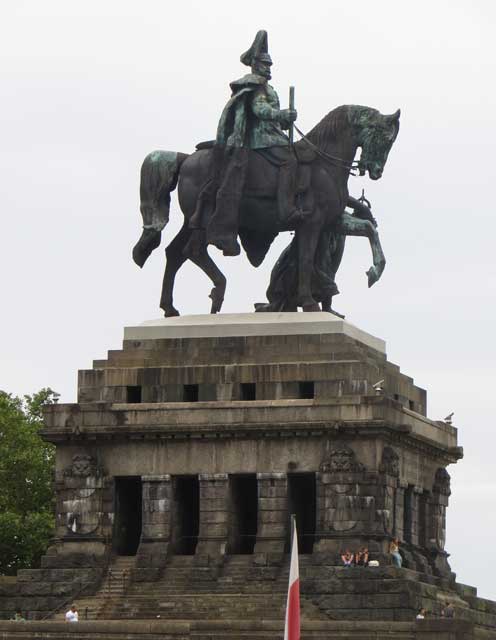
We entered the Rhine River gorge (a UNESCO heritage site) at the town of Koblenz where the Moselle River meets the Rhine. This junction is know as German Corner and is dominated by a large, pedestal’d statue of Emperor William I astride his mount, ass pointed towards France. (A monumental snub!)
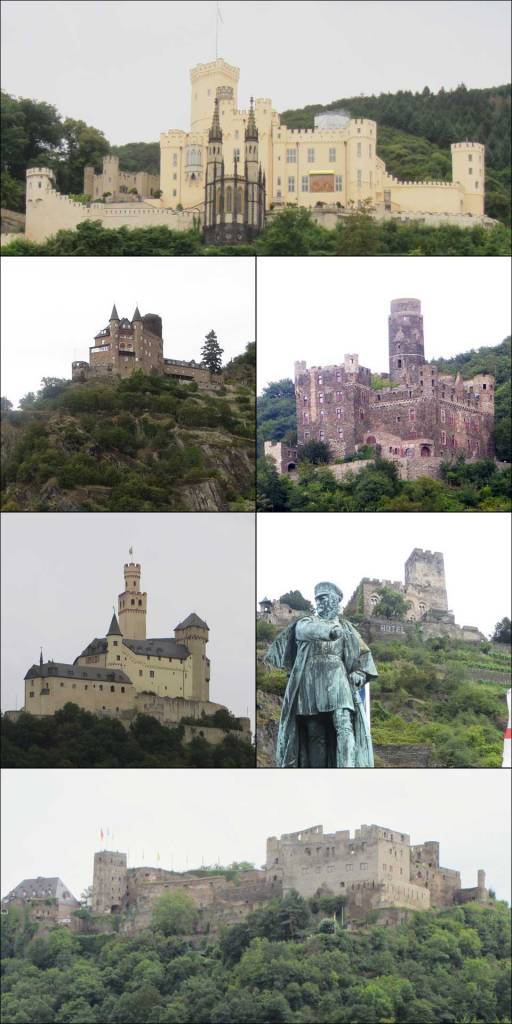
The gorge is a verdant landscape littered with ruined castles and terraced vineyards rising up on both banks as the serpentine Rhine meanders by. As we traveled upstream, the trip was narrated by our tour directors who pointed out the various castles and told their often-apocryphal stories that have morphed from myth into “hyth-story.”
The most fanciful of these narratives was the legend of the Loreley, a towering rock formation that marks a once-treacherous area of the Rhine the flows around it’s base. It is said to be named after a golden-haired siren who lured sailors to their deaths on the hidden boulders that once littered the riverbed.
Another story tells of dwarves–some say seven of them–living and mining within the rock. Truth be told, the name is a combination of old German and Celtic words for murmuring rock–a sound once produced by an untamed, rushing river current and area waterfalls enhanced by the unique acoustical properties of the massive rock itself.
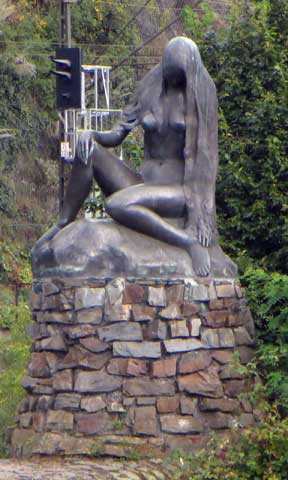
This ain’t no Brandy!*
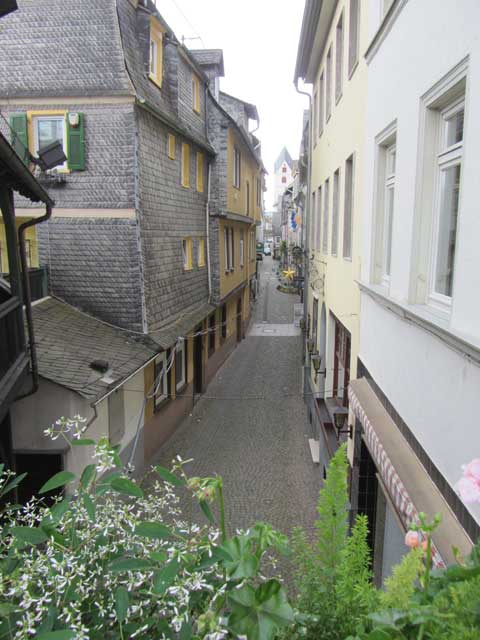
We docked that evening at Kaub: a tiny town hugging the Rhine shore composed basically of two parallel streets, one on each side of some elevated railroad tracks, and a third, perpendicular to the others and heading out of the town square away from the river into The Fatherland. This was once the hub of a lucrative river toll-collecting racket. (More on that later.) Today, the town’s primary businesses are wine production, shale mining and tourism.
After docking, Rob & I ventured into the town. We found a biergarten and enjoyed a tall, cold one.
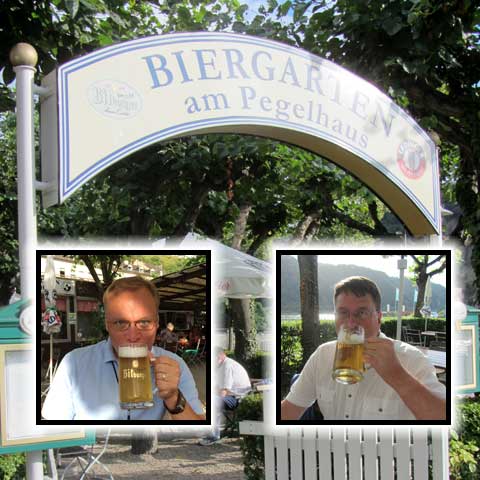
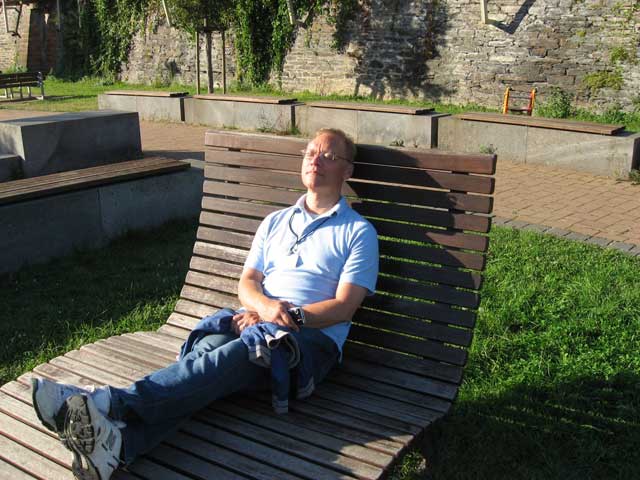
was Germany that legislated bier as “liquid bread.”
We returned to the ship for dinner…and no internet.
* The sailors say “Brandy, you’re a fine girl.
What a good wife you would be.
Yeah, your eyes could steal a sailor from the sea.”
-Looking Glass
 Dutch to Deutsch: The Great Rivers of Europe